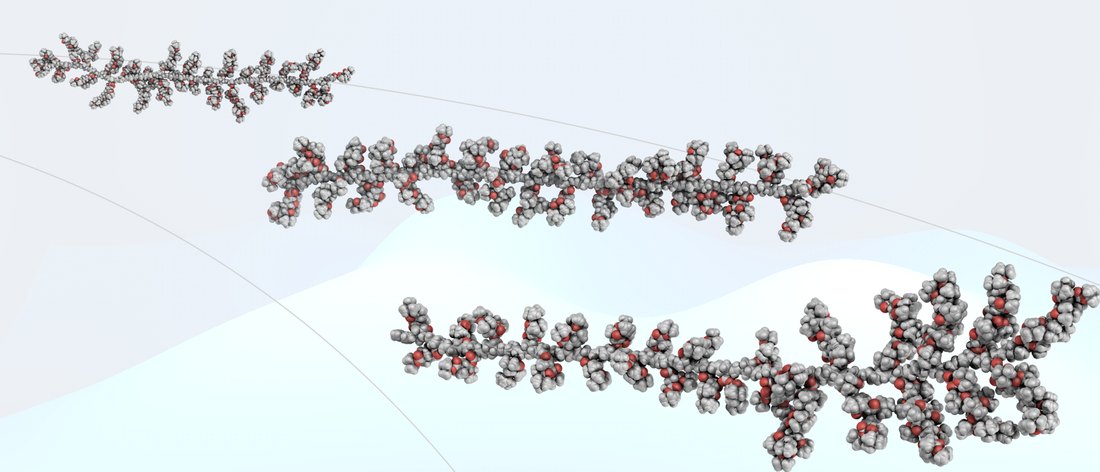
Topologically precise bottlebrush polymers
With backbone and side-chain lengths fixed, we can change topology one feature at a time.
Precision polymer engineering
We build polymers one molecule at a time, then use that precision to control structure: at surfaces, on nanoparticles, and in imaging agents.
Cain Department of Chemical Engineering
Louisiana State University
Discrete bottlebrush (DBP). Every molecule identical.
A conventional polymer sample is a mixture of many different molecules. Whatever you measure is an average over that mixture.
So we make samples in which every molecule is the same. Change one feature of the structure, and we can measure what that feature alone does.
Disperse
Diblock
Discrete
Uniform side chains let bottlebrushes align. Three bottlebrush monolayers compressed at the air–water interface. Disperse and diblock brushes pack without order, and discrete brushes align. Coarse-grained molecular dynamics courtesy of the Peters group, Louisiana Tech University. Shown at 2× speed.
Create precise polymeric building blocks
Understand structure and property relationships in complex polymers
Design multifunctional biomaterials and nanomaterials
With backbone and side-chain lengths fixed, we can change topology one feature at a time.
Architecture governs imaging performance more than fluorine content does. No gadolinium.
Recycling preparative SEC isolates single-species oligomers on a multigram scale.
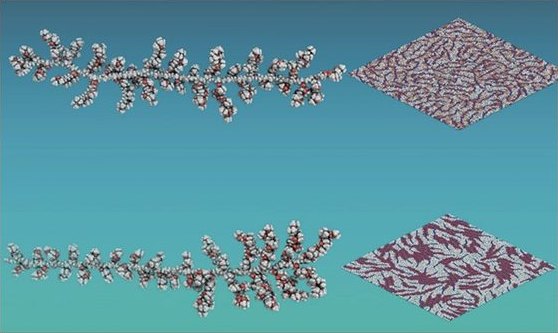
Side-chain sequence and flexibility set how a chain behaves at an interface.
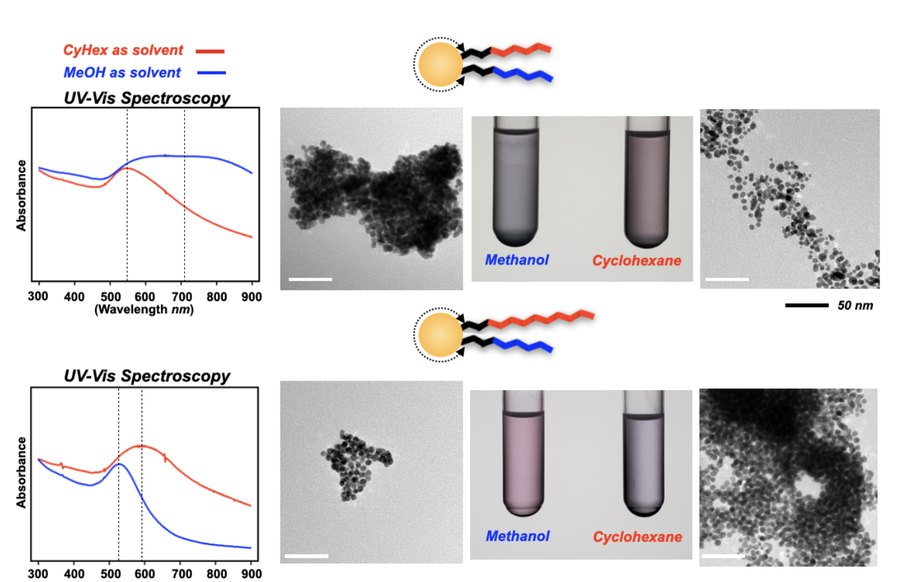
Ligand architecture controls how particles organize and what they do.
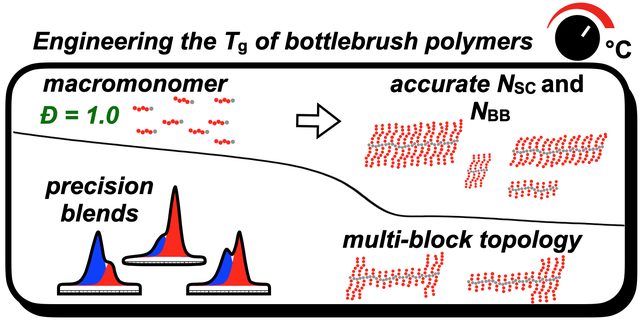
Side-chain length, backbone length and blending set Tg, so we can dial it in without changing the chemistry.
Each with a link to the journal.
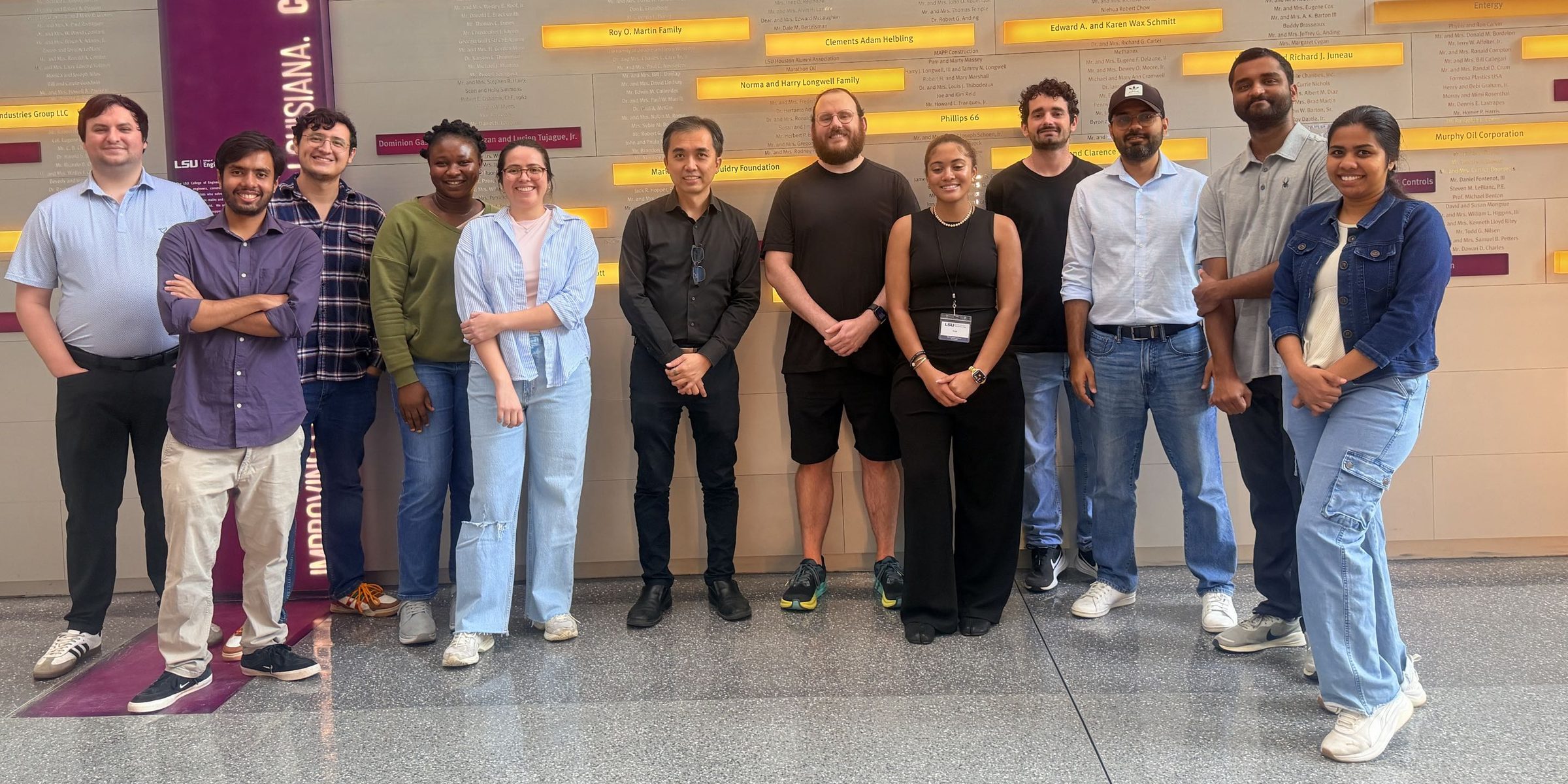
A postdoc, six PhD students and three undergraduates work in the lab.
For technical advice and for supporting the conferences we organize.